Along the light path: block, form, focus, control, mount, record, count photons.
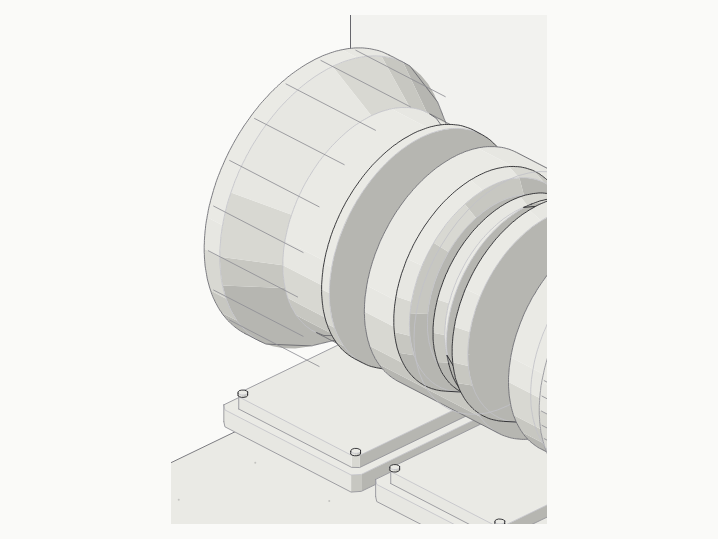
PART 01 / 07 · LENS HOOD
Lens hood
A tube in front of the glass that blocks light coming from outside the frame.
Affects Stray light bounces between elements: contrast lifts and flare blooms. A washed-out frame is not always bad footage — sometimes it is just a camera without a hood.
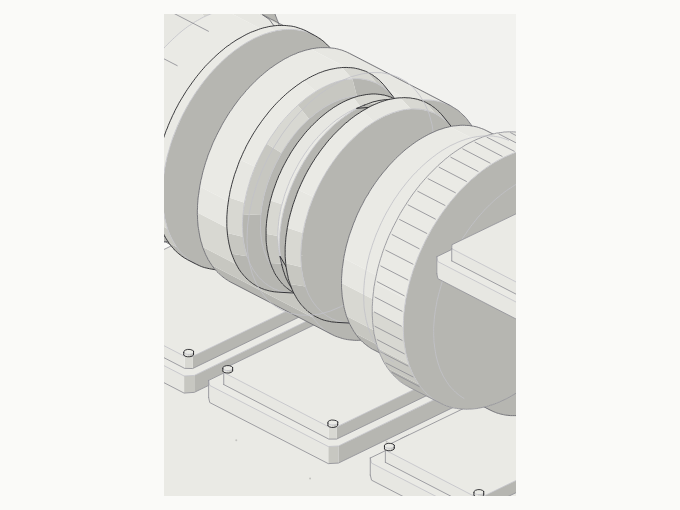
PART 02 / 07 · FRONT CELL
Front cell
The glass that actually forms the image. Focal length, maximum aperture and image circle all live here.
Affects Focal length sets the field of view; the image circle has to cover the sensor or the corners go dark. Changing a lens changes the view, not the quality.
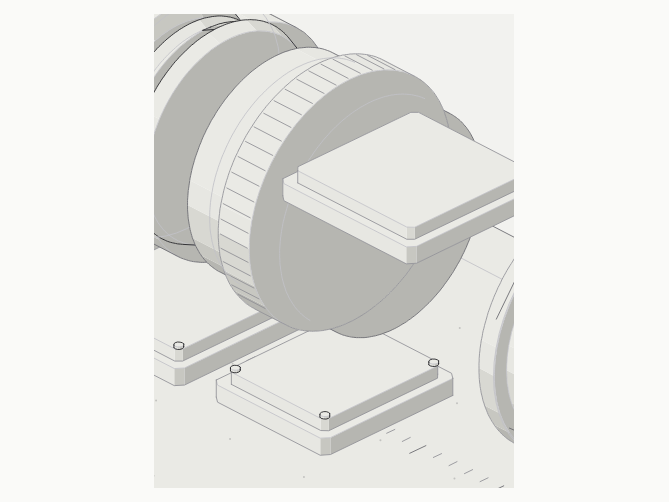
PART 03 / 07 · BARREL
Barrel
Outer tube, focus ring, iris ring — it holds the glass in the right place and lets you turn it.
Affects The focus ring moves the plane of focus: the line between sharp and soft. Get it wrong and no grade brings it back.
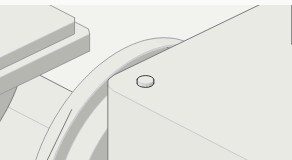
PART 04 / 07 · IRIS
Iris
A ring of blades forming a variable hole; each stop is √2 in area.
Affects How much light gets in (f/1.4 to f/16 is 128×), how deep the depth of field goes, and — stopped right down — diffraction softening. Less light means more amplification: that is where ISO and noise enter. irisf/1.4f/2f/2.8f/4f/5.6f/8f/11f/16f/4 · 1/8 light
PART 05 / 07 · MOUNT
Mount
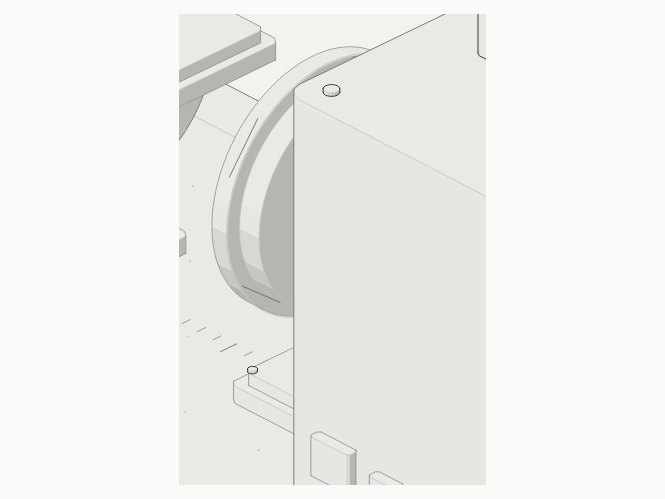
The mechanical and electronic interface between lens and body. It defines the flange distance.
Affects Flange distance decides which lenses fit and whether you need an adapter. Adapters shift it: soft corners, or no infinity focus. It also carries iris and focus commands from body to lens.
PART 06 / 07 · BODY
Body
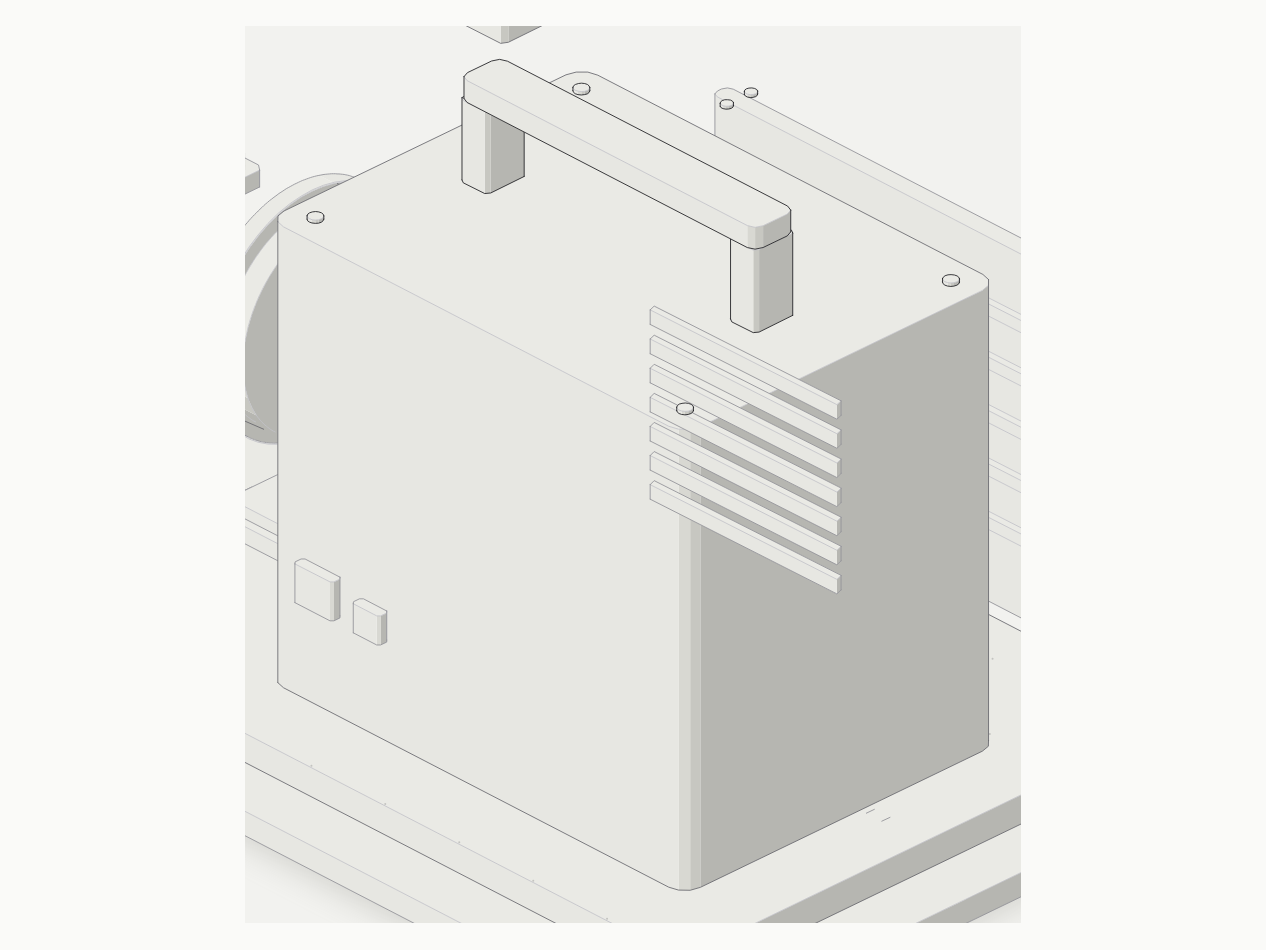
Recorder, cooling, ports, monitoring. The sensor sits inside it, but image quality is not its job.
Affects The body sets the recording format: codec, bit depth, chroma subsampling, bitrate. ProRes 4444 and 8-bit 4:2:0 out of the same camera leave very different room to grade.
PART 07 / 07 · SENSOR
Sensor
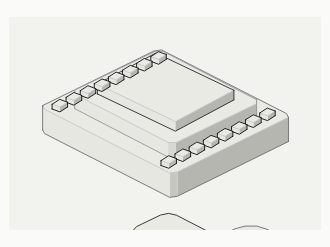
A silicon chip turning photons into charge. Every pixel counts photons.
Affects Resolution is pixel count; dynamic range is how much charge one pixel holds; noise is what happens when photons are few and the statistical spread dominates. How hard the readout amplifies that charge is ISO — and the noise is amplified with it.